

『Vortex flowmeter unit exchange』Related information(v cone flow meter|rotary gas meter|gallon meter|gear meter|metal tube rotameter|glass tube rotameter|nutating disk meter|transit time ultrasonic flow meter|wedge flow meter|pd meters|hydraulic flow meter|ultrasonic water flow meter|water flow meter|air flow meter|magnetic water flow meter|oxygen flow meter|gas flow meter|argon flow meter|air velocity meter|gasoline flow meter|fuel flow meter|ultrasonic water meter|digital water meter|nitrogen flow meter|solid flow meter|Oxygen tank flow meter|digital water flow meter|diesel fuel flow meter|steam flow meter|02 flow meter|compressed air flow meter|oil flow meter|liquid flow meter)
1. How to convert the range of a vortex flowmeter into the mass of steam? The core of measuring steam mass flow rate with a vortex flowmeter is to simultaneously monitor flow rate and operating parameters, and achieve conversion through density compensation calculation.
1. Conversion principle and formula: The vortex flowmeter directly measures the operating volume flow rate of steam (unit: m ³/h).
. To obtain the mass flow rate (unit: kg/h), the core formula is: mass flow rate=volume flow rate x fluid density. Therefore, the key to conversion is to accurately obtain the real-time density (ρ) of steam under the measurement state (i.e. current temperature and pressure).2. Implementation Path and Technical Scheme According to the steam state and measurement requirements, there are mainly two technical schemes
1. The mass conversion of saturated steam. The density (ρ) of saturated steam is a single value function of its pressure or temperature.
. Knowing one of the parameters, the density can be determined by querying the "Saturated Vapor Density Table" (IAPWS-IF97 formula). *Option 1 (Pressure Compensation): Install a pressure transmitter nearby downstream of the flow meter to measure the steam pressure (P), and calculate the density (ρ) based on the pressure value by referring to a table or calculating. *Option 2 (temperature compensation): Install a temperature sensor (such as PT100) to measure the steam temperature (T), and obtain the density (ρ) by looking up the temperature value in the table. *Preferred solution: Pressure compensation is commonly used in engineering. Because the linearity of the pressure density relationship curve of saturated steam is better, and the pressure measureme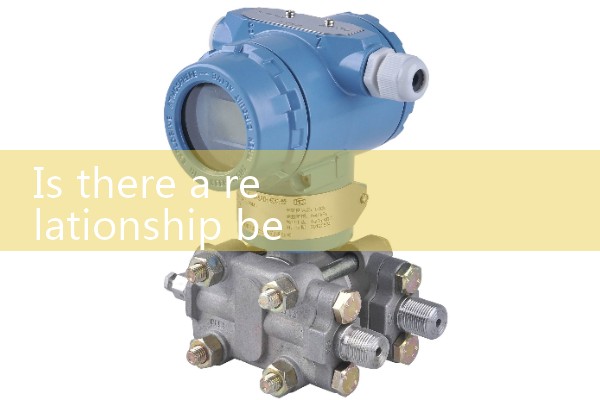
2. The conversion of the mass of superheated steam to the density of superheated steam is a function of both pressure and temperature, and both parameters must be monitored simultaneously. *Solution: Both pressure transmitter and temperature sensor need to be installed simultaneously. Connect the two signals together with the flow meter signal to the flow integrator (or transmit them to PLC/DCS through communication). The integrator has a built-in mathematical model (following the IAPWS-IF97 industrial formula), which calculates the accurate density (ρ) based on real-time P and T values, and then performs multiplication to obtain the mass flow rate.
III. Key Equipment and Parameter Configuration To achieve high-precision measurement, the following equipment needs to be configured and set the correct parameters: | Equipment Name | Key Functions | Selection/Configuration Points | |: --- |: --- | | | | | | Vortex Flow Meter | Measurement of Operating Condition Volume Flow Rate | Ensure that the range covers the minimum and maximum steam flow rates; The instrument coefficient K (pulse count/m ³) is set accurately. ||Pressure transmitter | measures steam pressure | the range should cover the working pressure range; The installation position should be on the downstream straight pipe section of the flowmeter, as close as possible. ||Temperature sensor | Measuring steam temperature (necessary for superheated steam) | PT100 platinum thermistor is usually used; The insertion depth of the temperature measuring sleeve should be sufficient to ensure measurement representativene
 Hot News
 Related AD