

『Digital Inline Air Flow Meter: Pneumatic Pipeline Airflow Efficiency Tracking』Related information(v cone flow meter|rotary gas meter|gallon meter|gear meter|metal tube rotameter|glass tube rotameter|nutating disk meter|transit time ultrasonic flow meter|wedge flow meter|pd meters|hydraulic flow meter|ultrasonic water flow meter|water flow meter|air flow meter|magnetic water flow meter|oxygen flow meter|gas flow meter|argon flow meter|air velocity meter|gasoline flow meter|fuel flow meter|ultrasonic water meter|digital water meter|nitrogen flow meter|solid flow meter|Oxygen tank flow meter|digital water flow meter|diesel fuel flow meter|steam flow meter|02 flow meter|compressed air flow meter|oil flow meter|liquid flow meter)
Digital Inline Air Flow Meter: Pneumatic Pipeline Airflow Efficiency Tracking
Quick Answer
A digital inline air flow meter gives you mass flow, temperature, and total flow data from a compressed air line. For pneumatic pipeline efficiency tracking, pick a meter with 4-20 mA HART or Modbus RTU output, a local digital display, and no moving parts. Send Silver Automation Instruments your pipe size, pressure, temperature, and flow range and we will suggest a model for your plant.
Why Compressed Air Efficiency Needs a Digital Inline Air Flow Meter
Here is the thing. Compressed air is one of the most expensive utilities in a plant. A typical system loses 20 percent to 30 percent of its air through leaks, open drain valves, and worn fittings. You do not see the loss until you measure flow on each branch line.
An inline meter shows actual air consumption per machine, per shift, or per area. That data lets you compare production lines and find hidden leaks. One of our customers, a food packaging site in Australia, found a 22 percent nighttime flow with no production running. That flow was pure leak load.
What Data You Get from a Digital Inline Air Flow Meter
These meters measure mass flow directly. For compressed air you usually want units like Nm3/h, kg/h, or SCFM. The local display shows current flow, total flow, gas temperature from an internal PT100, and totalized consumption. Many models also have a data logger function.
The output matters. Look for 4-20 mA HART as the analog signal. Also check for RS485 with Modbus RTU. This lets the meter talk to a PLC, SCADA system, or a paperless recorder without extra signal converters.
Key Specifications for Pneumatic Pipeline Use
We recommend inline thermal mass flow meters for most compressed air applications. They handle pipe sizes from DN15 up to DN100 in standard designs. Larger line sizes can use insertion versions if needed.
Pressure and temperature should be checked per model. A common limit is 16 bar and 100 °C for standard inline air meters. If your compressed air is dried and filtered, a standard model works well. If there is water mist or oil carryover, add a filter and moisture separator upstream.
Accuracy on air is typically plus or minus 1 percent of reading plus 0.5 percent full scale. For leak detection and energy tracking this is enough. For custody transfer you may need a different approach.
Installation Details That Prevent Bad Readings
Install the meter in a straight section of pipe. Use 10 diameters of straight run upstream and 5 diameters downstream. Do not place the meter right after an elbow, valve, or tee. Swirl in the flow causes unstable readings.
In practice, most bad readings come from a short straight run or wet air. We have seen this on customer sites many times. Mount the meter horizontally or vertically depending on the model. Keep the sensing element fully inside the flow stream. If the compressed air is wet, install a drain leg before the meter. Moisture on the sensor creates false high readings and shortens sensor life.
<
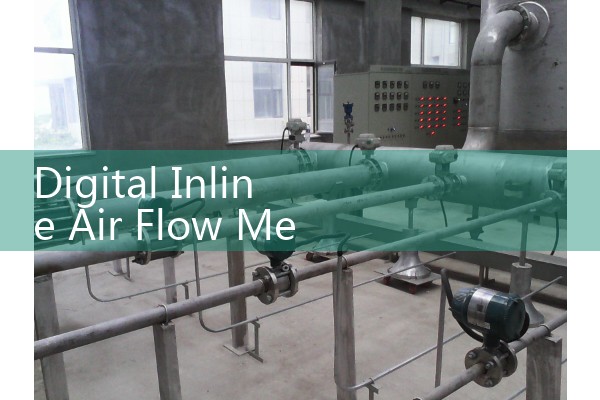
Last year a paint manufacturer in Vietnam asked us to help track airflow on a DN40 header at 6 bar. They had three spray booths and one packaging line. Their electric bill was high but they could not identify which line wasted air.
We supplied a digital inline thermal mass flow meter with 4-20 mA HART and RS485 Modbus RTU. Their team installed it on the DN40 header after 15 diameters of straight pipe. Within one week they found a leak in a night shift cleaning line. The data showed 18 percent of total flow happening between 1 a.m. and 5 a.m. with no production.
After fixing the leaks, they used the same meter to monitor daily consumption. Payback from lower compressor running hours was under four months.
Output Integration with PLC and Recorders
A digital inline air flow meter is not useful if the signal stops at the local display. Wire the 4-20 mA output to your plant PLC. Use Modbus RTU if you want total flow, temperature, and diagnostic data on one bus. Silver Automation Instruments also supplies paperless recorders for sites without a PLC.
For hazardous areas, ask about ATEX Zone 1 or Zone 2 options. Not all inline air meters have hazardous area certification, so specify the area class early.
How to Order the Right Digital Inline Air Flow Meter
Send us these values with your inquiry. Pipe size in DN, operating pressure in bar, gas temperature in °C, minimum and maximum flow in Nm3/h or SCFM, and required signal output. We also need the compressed air quality, whether the gas is dry or wet, and the installation location.
Silver Automation Instruments can propose a thermal mass inline meter, a vortex meter, or a differential pressure setup depending on your flow range and budget. Our team has supplied flow meters to users in Southeast Asia, Oceania, Latin America, Africa, and the Middle East.
Contact Silver Automation Instruments at flow-meter.com.au. Tel +86-25-68650347. WhatsApp +86-25-52155837. WeChat +86 15365082610.
FAQ
Can a digital inline air flow meter measure small leaks?
It can measure base flow and changes as small as the meter resolution allows. For small leak detection, match the meter range to the minimum expected flow, not just the maximum line size.
What is the normal pipe size range for inline air meters?
Standard inline thermal mass meters cover DN15 to DN100. For larger headers, insertion thermal mass meters are more practical.
Do I need a pressure sensor with the flow meter?
Not always. The meter measures mass flow directly. If you need standard volumetric flow at pressure and temperature, use the built-in temperature input and a separate pressure transmitter.
Can these meters work with wet compressed air?
Wet air causes sensor drift and false peaks. Install a filter, dryer, and drain leg before the meter for stable readings.
What output should I request for a new installation?
Request 4-20 mA HART and RS485 Modbus RTU. This gives analog input for the PLC and digital data for diagnostics.
 Hot Blog
 Related AD