

『Cc/min Flow Meter: Low-Flow Chemical Injection Sizing and System Controls』Related information(v cone flow meter|rotary gas meter|gallon meter|gear meter|metal tube rotameter|glass tube rotameter|nutating disk meter|transit time ultrasonic flow meter|wedge flow meter|pd meters|hydraulic flow meter|ultrasonic water flow meter|water flow meter|air flow meter|magnetic water flow meter|oxygen flow meter|gas flow meter|argon flow meter|air velocity meter|gasoline flow meter|fuel flow meter|ultrasonic water meter|digital water meter|nitrogen flow meter|solid flow meter|Oxygen tank flow meter|digital water flow meter|diesel fuel flow meter|steam flow meter|02 flow meter|compressed air flow meter|oil flow meter|liquid flow meter)
Cc/min Flow Meter: Low-Flow Chemical Injection Sizing and System Controls
Quick Answer: For liquid chemical injection from 0.5 cc/min to 500 cc/min, a Coriolis mass flow meter gives direct mass flow and density data. Use a DN15 or smaller sensor with 4-20 mA HART output for remote monitoring and closed loop control. Size the meter based on minimum, normal, and peak injection rates in cc/min plus viscosity, pressure, and temperature.
What Is a Cc/min Flow Meter for Chemical Injection
A cc/min flow meter measures volumetric flow rate in cubic centimeters per minute. This unit is common for dosing chemicals like corrosion inhibitors, scale inhibitors, biocides, oxygen scavengers, and flocculants. One cc/min equals 0.001 litre/min or 0.06 litre/hour. At these low flow rates, small errors in measurement can change chemical concentration quickly.
Silver Automation Instruments supplies flow meters for chemical injection skids in Southeast Asia, the Middle East, Latin America, Africa, and Oceania. Typical customer sites include water treatment plants, oil and gas wellheads, refineries, food and beverage dosing lines, and marine exhaust gas treatment systems.
Flow Rate Ranges and Pipe Sizes
Low-flow chemical injection usually covers 0.1 cc/min to 1000 cc/min. For a 10 mm pipe or 1/4 inch tubing, a Coriolis meter with a DN15 or DN10 connection works well. For rates from 50 cc/min to 5000 cc/min, a DN15 or DN20 oval gear meter may be a lower cost option if viscosity is stable.
Do not size a meter based only on the maximum pump output. Check the minimum flow rate too. Many dosing pumps pulse. The flow meter must read the peak flow during each stroke without clipping the signal. We ask customers for the pump stroke rate, stroke volume, and back pressure before recommending a model.
Key Sizing Parameters in cc/min
Send us pressure in bar, temperature in °C, pipe size in DN, and flow range in cc/min. We also need viscosity in cP if the chemical is thicker than water. A scale inhibitor at 25 °C and 3 cP behaves differently from a polymer at 400 cP. We have seen a paint manufacturer in Southeast Asia replace two thermal mass meters because the viscosity changed between batches.
For gas phase injection such as ammonia or chlorine, thermal mass flow meters can work. For liquid phase dosing, Coriolis mass flow meters are often the best fit because they ignore changes in viscosity, density, temperature, and pressure. But they cost more than oval gear or turbine types.
Recommended Flow Meter Types
In practice, most engineers skip turbine meters for chemical injection below 100 cc/min. The bearings wear and the pulses are weak. We recommend three types depending on the application.
Coriolis mass flow meter: direct mass flow in g/min or kg/h, density output, no moving parts, high accuracy from 0.1% to 0.2% of rate. Use for expensive chemicals, custody transfer, or varying viscosity. A DN15 Coriolis meter can cover 0.3 kg/h to 600 kg/h depending on model.
Oval gear flow meter: positive displacement, good for clean viscous liquids from 5 cP to 1000 cP. Lower cost than Coriolis. Good for polymer dosing or lubricant injection. Accuracy around 0.5% of rate. Install a strainer upstream.
Thermal mass flow meter: for low gas flow in cc/min or L/min. Common for air, nitrogen, carbon dioxide, and biogas injection. Not for liquid.
Electromagnetic and ultrasonic meters are generally not the first choice below 500 cc/min because the small pipe size limits signal strength. Vortex meters also do not perform well at very low velocities.
System Controls and Signal Integration
Most chemical injection skids use a PLC or dosing controller. The flow meter should output 4-20 mA with HART. Some customers want pulse output for totalising batch volume. For hazardous areas, specify ATEX Zone 1 or Class I Division 2.
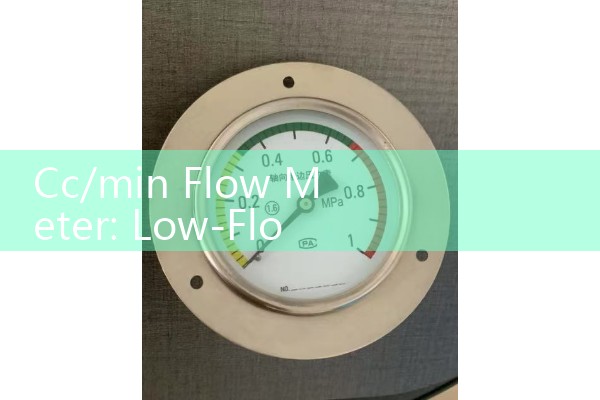
Use the flow meter signal to close the loop between pump speed and actual dose rate. If the pump is a diaphragm type with pulsed flow, set a damping time on the transmitter. Damping from 0.5 s to 2 s smooths the signal without hiding blockages. We have seen a water treatment plant in Vietnam set damping to 10 s and miss a blocked injection line for three hours.
For closed loop control, pair the flow meter with a pressure transmitter from Silver Automation Instruments. The pressure signal helps the PLC separate a real flow drop from a pump fault. For remote sites, pair the meter with a paperless recorder from Silver Automation Instruments. The recorder stores flow rate, pressure, and totaliser data. You can download the data via USB or Ethernet.
Installation Notes for Low Flow Chemical Injection
Install the meter close to the injection point but not directly on a vibrating pump head. Use a flexible hose connection if the pump vibrates. Keep the meter tube full. For vertical runs, install flow upward. For Coriolis meters, avoid air pockets because two-phase flow causes measurement noise. Use a back pressure valve downstream to keep the line full and prevent flashing.
For oval gear meters, install a filter or strainer at 50 to 100 microns depending on the chemical. Some polymers can coat the gears. Flush the meter after each batch if the chemical cures or crystallises.
For thermal mass gas meters, mount in a straight pipe section. Ten diameters upstream and five diameters downstream is enough for most low flow applications. Avoid condensation in the gas line.
How to Order from Silver Automation Instruments
Send us your flow range in cc/min, pressure in bar, temperature in °C, pipe size in DN, and chemical name if possible. Include viscosity in cP for liquids and gas type for gas flow. We reply with a model, price, and delivery time. Contact Silver Automation Instruments at Tel: +86-25-68650347, WhatsApp: +86-25-52155837, WeChat: +86 15365082610.
FAQ
Question: What is the best flow meter for 10 cc/min chemical injection?
Answer: For 10 cc/min liquid chemical injection, a Coriolis mass flow meter with a small sensor is usually the best choice. It measures mass flow directly and works with changing viscosity. An oval gear meter can work if the liquid is clean and viscosity stays above 5 cP.
Question: Can a cc/min flow meter handle high pressure chemical injection?
Answer: Yes. Many Coriolis and oval gear meters from Silver Automation Instruments handle pressures up to 100 bar, 200 bar, or 400 bar depending on the model. Send the maximum pressure in bar. Do not assume standard flanges are enough for high pressure wellhead skids.
Question: Do I need ATEX certification for chemical injection in oil and gas?
Answer: Most oil and gas sites in the Middle East, Southeast Asia, and Latin America require ATEX Zone 1 or IECEx certification. Specify the hazardous area classification when you request a quote. We supply ATEX certified Coriolis flow meters for wellhead chemical injection.
Question: What signal output should I use for a dosing pump controller?
Answer: Use 4-20 mA with HART for analogue control and diagnostics. Pulse output works for batch totalising. Some skid builders also use RS485 Modbus. Confirm the PLC input type before ordering.
Question: How do I size a flow meter for a pulsing dosing pump?
Answer: Give us the pump stroke rate, stroke volume, and back pressure. The meter should read the peak instantaneous flow without saturating. A meter sized only for average flow can miss the pulse peak. We size the sensor based on the peak flow in cc/min.
 Hot News
 Related AD