

 Current position > News detail
『Engine Oil Flow Meter Selection: High-Temperature and High-Pressure Viscous Fluid Sizing』Related information(v cone flow meter|rotary gas meter|gallon meter|gear meter|metal tube rotameter|glass tube rotameter|nutating disk meter|transit time ultrasonic flow meter|wedge flow meter|pd meters|hydraulic flow meter|ultrasonic water flow meter|water flow meter|air flow meter|magnetic water flow meter|oxygen flow meter|gas flow meter|argon flow meter|air velocity meter|gasoline flow meter|fuel flow meter|ultrasonic water meter|digital water meter|nitrogen flow meter|solid flow meter|Oxygen tank flow meter|digital water flow meter|diesel fuel flow meter|steam flow meter|02 flow meter|compressed air flow meter|oil flow meter|liquid flow meter)
Engine Oil Flow Meter Selection: High-Temperature and High-Pressure Viscous Fluid Sizing
Quick Answer: Select a positive displacement oval gear flow meter or a Coriolis mass flow meter for engine oil at high temperature and high pressure. Both meter types handle viscous fluids from 5 cP to over 1000 cP. Silver Automation Instruments supplies these meters with pressure ratings up to 100 bar and temperature ratings up to 200 °C. Send your oil viscosity in cP, operating temperature in °C, pressure in bar, pipe size in DN, and flow range in kg/h or L/h to get a selection.
Why engine oil flow measurement is different
Engine oil is not water. Its viscosity changes with temperature and grade. A heavy marine cylinder oil may reach 500 cP at 40 °C. A light turbine oil may drop below 10 cP at 100 °C. The flow meter must handle this shift without losing accuracy.
High pressure is common in engine lubrication systems. Turbocharger oil lines, hydraulic lube oil skids, and engine test benches often run at 20 to 60 bar. Some test stands reach 100 bar. The meter body, seals, and bearings must survive continuous exposure at these pressures.
High temperature adds another layer. Drain oil lines may run near 90 °C. Engine test stands can run oil at 130 °C to 150 °C. Some hot oil flushing loops reach 180 °C. A standard turbine flow meter with a low temperature pickup will fail quickly. In practice, most engineers skip this part and then replace the meter within six months.
Meter types that work for hot viscous engine oil
Oval gear flow meters are our most common recommendation for engine oil. Positive displacement gears give a direct volumetric reading. This type is repeatable even with viscosity changes from 10 to 500 cP. We have seen oval gear meters on lubricant blending skids, diesel engine test cells, and marine oil transfer lines.
Coriolis mass flow meters work well when you need mass flow, density, or temperature in one device. A Coriolis meter is less sensitive to viscosity than many other types. It measures kg/h directly. This helps with engine fuel oil and lube oil consumption tests where mass balance is critical. Silver Automation Instruments supplies Coriolis meters for flows from 0.1 kg/h to 1000 kg/h on small engine test benches.
Thermal mass flow meters are not ideal for liquid engine oil. They are built for gas. Electromagnetic flow meters do not work because engine oil is non-conductive. Vortex meters can work but lose low flow range with high viscosity. So your shortlist should be oval gear or Coriolis for most engine oil loops.
Sizing data you need before you ask for a quote
We process many engine oil flow meter enquiries every month. The fastest way to get a valid quote is to provide these five data points.
Fluid type and grade. Example: SAE 15W-40, SAE 40, marine system oil, or synthetic compressor oil. Viscosity at operating temperature in cP or cSt. Example: 22 cSt at 100 °C. Operating temperature in °C. Example: 120 °C. Operating pressure in bar. Example: 35 bar. Flow range in L/h or kg/h. Example: 50 to 700 kg/h. Pipe size and process connection. Example: DN25, BSPP or ANSI flange.
Do not give viscosity only at 40 °C if the line runs at 120 °C. The viscosity at the actual operating temperature matters more. A meter sized for 40 °C may be too large or too small at 120 °C. We have seen this on customer sites many times in Vietnam and Indonesia.
Oval gear flow meter for high pressure engine oil
Silver Automation Instruments offers oval gear flow meters with stainless steel or cast iron bodies. The high temperature version uses PEEK or graphite gears and a high temperature pickup. It works from 5 t
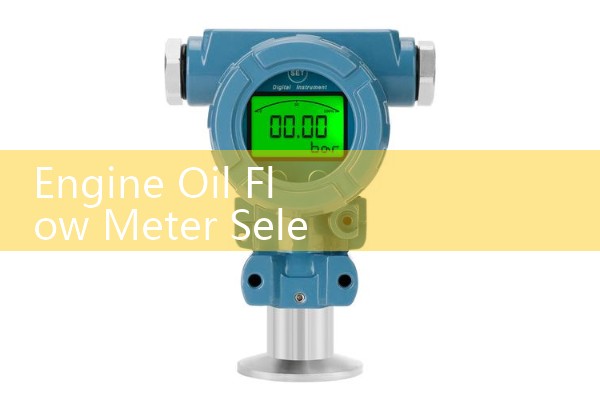
This meter outputs pulse or 4-20 mA. HART is available for remote configuration. For hazardous areas, we supply Ex d or Ex ia versions suitable for ATEX Zone 1. A paint manufacturer in Southeast Asia uses this meter on a hot oil circulation loop at 8 bar and 140 °C. The line runs 24 hours a day, 6 days a week.
For engine oil flow meter selection, the oval gear is often the lowest cost option that still handles high viscosity. It needs clean oil. If your oil contains metal particles or abrasive carbon, add a strainer or choose a Coriolis meter with straight tube.
Coriolis mass flow meter for viscous oil test stands
Coriolis meters from Silver Automation Instruments handle engine oil at high pressure and high temperature without moving parts in the flow stream. The wetted parts are 316L stainless steel. This is important for synthetic oils and aggressive additives. You can measure mass flow, density, and temperature at the same time. That single device replaces a flow meter, a density meter, and a PT100.
On a medium-speed diesel engine test bench, a Coriolis meter can measure lube oil flow from 0.2 to 20 kg/min. Pressure drop is higher than an oval gear meter, so you must check the viscosity and line pressure. But the accuracy is strong. We often specify 0.2% of rate for this type of test. The output is normally 4-20 mA HART, with Modbus or pulse as options.
Real-world notes from customer sites
Last year a customer in Vietnam asked us for an engine oil flow meter for a shipyard test bench. The oil was SAE 30. The line ran at 130 °C and 45 bar. They first tried a turbine meter. It failed after three weeks because the hot oil degraded the pickup. We replaced it with an oval gear meter with a high temperature pickup and no display in the hot zone. The meter has run for 11 months without service.
In one lubricant blending plant in Indonesia, a Coriolis meter solved a batch control problem. The batch controller needed mass flow, not volume, because oil density changes with temperature. With a volumetric oval gear meter alone, the batch weight shifted by 2 to 3 percent between morning and afternoon. The Coriolis meter brought that shift below 0.5 percent.
FAQ
1. What flow meter is best for engine oil at high temperature?
An oval gear positive displacement meter or a Coriolis mass flow meter. Both handle high viscosity and can be built for 150 °C to 200 °C.
2. What pressure rating do I need for engine oil flow measurement?
Most lube oil lines run from 5 to 60 bar. We recommend 100 bar rated meters for test stands and high pressure transfer. Silver Automation Instruments can supply PN100 or higher on request.
3. Does a magnetic flow meter work for engine oil?
No. Electromagnetic flow meters require a conductive liquid. Engine oil is non-conductive. Use oval gear or Coriolis instead.
4. How do I size a flow meter for viscous oil?
Use the actual viscosity at operating temperature, not the 40 °C viscosity. Provide flow range, pressure, temperature, and pipe size. We will select the correct meter size and materials.
5. Can I get ATEX approval for an engine oil flow meter?
Yes. Silver Automation Instruments supplies Ex d and Ex ia versions for hazardous areas. Tell us the zone classification and gas group when you send your inquiry.
To request a selection or quote, send your pressure in bar, temperature in °C, pipe size in DN, and flow range in kg/h or L/h to Silver Automation Instruments.
Tel: +86-25-68650347
Whatsapp: +86-25-52155837
WeChat: +86 15365082610